
Two container ship fires force crew to abandon ship
Dutch salvors were called in to help rescue a container ship that caught fire twice in the Dover Strait last week, forcing crew to abandon ship.
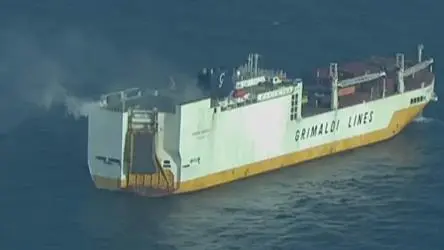
An international rescue effort was organised when the Malta-flagged Grande Brasile caught fire mid-morning on 18 February, with a Mayday call reporting a fire on board and complete loss of power and steering.
The 56,600gt, 213m long vessel had left Antwerp earlier and was in the southwest-bound lane of the Dover Strait Traffic Separation Scheme around 24km east of Ramsgate.
The incident occurred in the UK’s Search and Rescue Region and an international response was coordinated by HM Coastguard. As well as its own rescue helicopter and fixed-wing aircraft assets, Royal National Lifeboat Institution all-weather lifeboats from Ramsgate and Dover were tasked to the scene.
With the vessel’s close proximity to neighbouring countries’ borders, air assets from Belgium and the Netherlands also responded along with the French Navy’s Boulogne-based Emergency Towing Vessel Abeille Normandie.
Grande Brasile’s crew activated the vessel’s on-board fire suppression systems and once under control the immediate life-saving assets were stood down.
Later the same day, however, a second fire was reported on board the vessel and this time the crew were unable to contain the blaze and had to abandon ship to be picked up by an assisting tug.
After transferring to the Ramsgate lifeboat, which along with Dover lifeboat had been recalled to the scene, the vessel’s exhausted 28-person crew were handed to ambulance and coastguard teams at Ramsgate.
“This was a challenging multinational rescue, however I was impressed by the crew of the stricken cargo vessel as they remained calm throughout their ordeal,” said Ramsgate lifeboat coxswain Ian Cannon. “I have huge respect for the master of the ship, who performed his duties to the utmost, remaining in his lifeboat until all of his crew were safely on the Ramsgate lifeboat and had been accounted for. He was the last to leave our lifeboat when we arrived back into Ramsgate.”
Salvage operation
By this time a major salvage operation had swung into action, with Terneuzen-based Multraship’s Multratug 35 and Multratug 36 quickly on scene to provide vessel control and fire-fighting assistance with Abeille Normandie still in attendance.
Lloyd’s Salvage Arbitration Branch reported a Lloyd’s Open Form contract had been established with Rotterdam-based Smit Salvage BV, part of the Boskalis group of companies, and its AHTSs Bear (187tbp, built 1999) and Kamara (83tbp, built 2005) were tasked to assist, including fire-fighting and boundary cooling measures for Grande Brasile.
With the location of the incident in busy waters relatively close to shore and the Dover Strait Traffic Separation Scheme, the stricken vessel was towed to a less congested area around 40km to the northeast in the Outer Thames Estuary, where the salvage operation could continue.
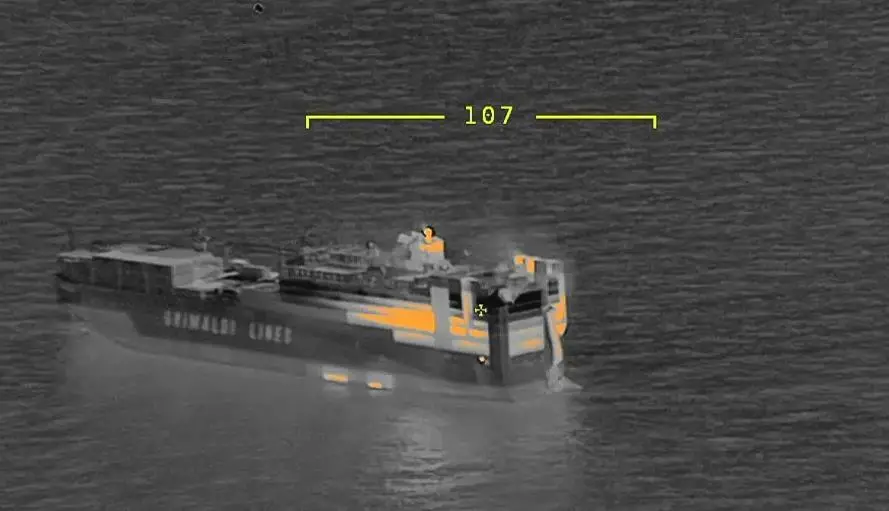
Netherlands Coastguard-supplied infra-red aerial images of Grande Brasile suggest the fire was concentrated in the after section of the ship. The vessel carries both containers (1,321 teu) forward with 3,515 lane metres of roro space aft below the accommodation.
The salvage operation involved regaining control, whereby the vessel could enter a port of refuge along with monitoring any potential pollution risks. After several days the Norway-owned and flagged AHTS Brage Viking (210tbp built 2012) arrived from Montrose to provide further assistance.
Following an overnight passage involving vessels including Bear, Brage Viking, Multratug 35 and Multratug 36, the convoy arrived at Antwerp on 23 February where the next phase of the operation could continue.
The episode demonstrates how a prompt, professional response by maritime emergency services and the commercial salvage sector rescued the crew of Grande Brasile and averted environmental harm, as well as keeping costs to a minimum.