


Łeba makes waves with offshore wind port upgrade
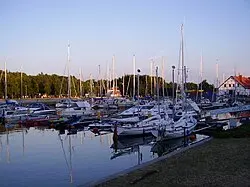
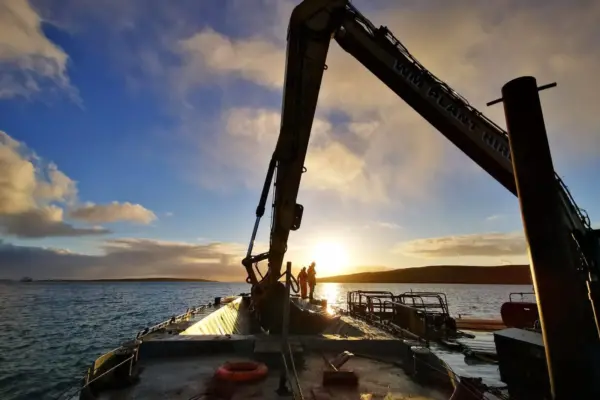
The latest phase of a major campaign to transform Poland’s Port of Łeba into an offshore wind hub was completed last week with the removal of 225,000m³ of sediment from the entrance channel and harbour approaches.
Rohde Nielsen’s trailing suction hopper dredger Magni R completed the capital dredging works at the Port of Łeba, Poland, as part of a wider civil engineering programme intended to improve navigation, reduce wave exposure and prepare the port to accommodate vessels serving offshore wind farms in the Polish Baltic Sea.
Material suitable for reuse was used for shoreline restoration and coastal protection.
The dredging is one element of a wider reconstruction of the port entrance being delivered under the Maritime Office in Gdynia’s project to establish an offshore service terminal at Łeba.
Two persistent constraints at Łeba are shallow areas that limit navigation and wave penetration that can make conditions inside the harbour difficult, particularly during storms.
Planned works include a new eastern island breakwater approximately 262m long, an extension of the western breakwater, a new approach channel with navigational marking and a turning basin.
The scheme also includes three sediment traps and a western groyne of approximately 280m. These structures are intended to improve the port’s protection and reduce the accumulation of sand at its entrance.
Quay works and safety improvements
The modernisation programme also extends into the harbour. The Maritime Office has included renovation of the Malta Quay and an internal pier, together totalling around 140m.
The works involve replacing the existing sheet-pile wall with a new anchored structure, rebuilding the reinforced-concrete capping beam and restoring the quay’s full load-bearing capacity.
The authority says the renewed infrastructure is intended to reduce the risk of incidents as crew transfer vessel movements increase during offshore wind farm construction and operation. It is also intended to improve the ability of emergency and rescue services to respond from the port.
Poland’s offshore wind pipeline includes 19 permitted projects, with Baltic Power the first to become operational this year.
Related Articles
 OTHER NEWS
 OTHER NEWS
 DREDGING & FLOOD DEFENCE