

Report reveals risks of North Sea crowding
The Netherlands is looking at how to ensure safer navigation in an increasingly crowded North Sea after an incident that highlighted the risk of striking fixed and floating objects.
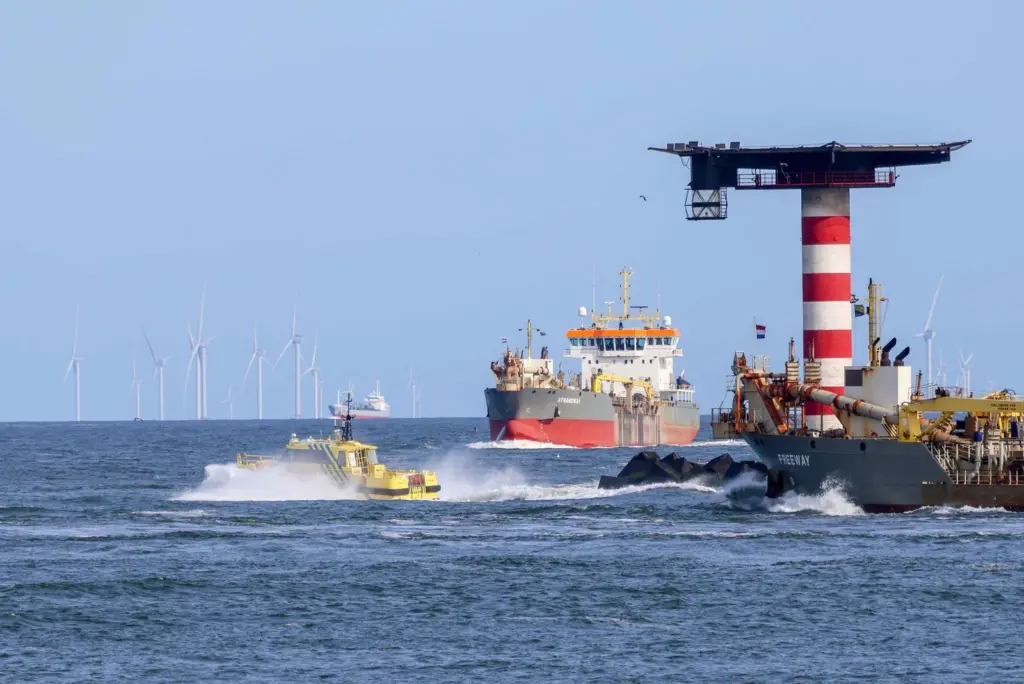
In 2022, the Maltese-flagged bulk carrier Julietta D encountered problems during a storm in the North Sea off IJmuiden. The vessel went adrift and struck another anchored vessel before alliding with the foundations of a future wind turbine and an under-construction transformer platform.
The incident was investigated by the Maltese Marine Safety Investigation Unit, but as it was just one of a series of similar accidents the Dutch Safety Board opened an investigation into risk management for shipping in the North Sea.
North Sea crowding
The North Sea is surprisingly crowded, home to 160 oil and gas rigs, defence training areas, Natura 2000 areas and sand and shell extraction activity.
Add to this around 700 wind turbines in zones restricted to navigation, 7,000km of undersea pipelines and 4,000km of cables, all in conflict with conventional shipping activity.
Dutch renewable energy ambitions alone will see these numbers increase.
It has emerged that there is only limited understanding of subsequent risks to maritime safety, with “multiple gaps” in decision making and risk analysis processes, an aspect examined in detail.
Decisions taken now on the installation of fixed objects will present risk implications between 2030 and 2050, with thousands of such objects expected to appear post-2030, including hydrogen and ammonia production offshore requiring transport shorewards by pipeline or tanker.
With shipping also expected to increase and no traffic management system in the greater part of the North Sea, the Dutch Safety Board believes shipping safety must evolve to match the increasing complexity from wind energy and shipping scale-up.
While considering the implications for its own waters and ports, the Netherlands recognises the issues involve all countries bordering the North Sea, defined internationally as where unobstructed passage of vessels must be protected.
Calling on other nations
The Board has decided to meet the issue head on, calling on the Dutch Minister of Infrastructure and Water to join other North Sea countries and discuss how shipping can continue to travel safely as waters become busier.
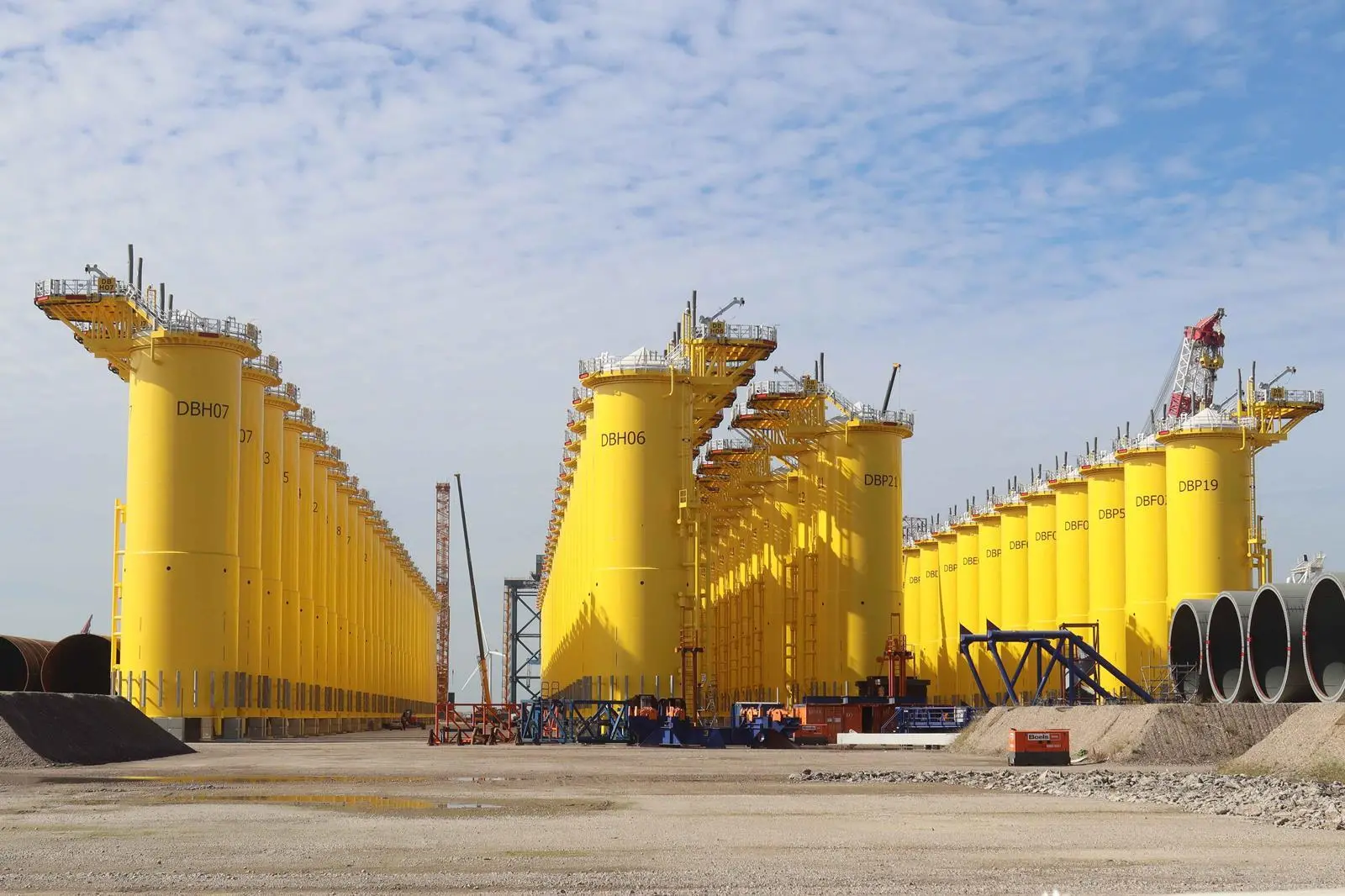
Specifically, the report recognises that spatial layout in the Dutch EEZ is determined by the Netherlands government but can only influence international shipping (which has freedom of navigation) within the zone to a limited extent, any changes for example establishing a Traffic Separation Scheme requiring IMO approval.
Fixed ‘buffer strips’ between wind farms and shipping lanes ensuring a ship can execute a 360o turn safely have been reduced to a distance based on a “dimensionally normative vessel”.
Responsibilities
The relevant Dutch ministries decided on a package of seven measures, including a traffic management system, installing additional sensors in and around wind farms and additional emergency towing vessels (ETVs), along with establishment of the Offshore Wind Energy Shipping Safety Monitoring and Research Programme.
Noting that the effectiveness of an ETV depends on factors including its approach time, technical reliability and bollard pull, the study finds that “for current ETVs, assisting some wind-sensitive vessels is already challenging upwards from wind force six because of the bollard pull required”.
The report finds there was limited understanding of shipping safety risk when decisions were made on positioning fixed objects in the North Sea, with shipping safety studies failing to provide necessary understanding of the risks. The study examines this particular area in some detail.
The Board considers a different approach to risk management where positioning of fixed objects in the North Sea is necessary, and a number of recommendations are made to the Minister of Infrastructure and Water Management.
But while the Netherlands can determine what happens in its own waters, the Dutch EEZ occupies but a small part of the North Sea and with shipping criss-crossing between adjacent countries and traffic transiting through the waters an international approach to the problem is required.
A further recommendation is that the Minister and other North Sea countries press for international frameworks to be modified based on the understanding gained of shipping safety risks and in doing so, make use of the option for submitting specific proposals to the IMO.
The study can be found at https://onderzoeksraad.nl/en/pers/limited-understanding-of-risks-to-shipping-from-north-sea-activities/
Related Articles
 SAFETY & TRAINING
 FEATURES & VIDEOS
 SAFETY & TRAINING