![MaritimeJournal[Seawork]](https://www.maritimejournal.com/wp-content/uploads/2026/09/MaritimeJournalSeawork.svg)



Orca AI brings a sharper eye to berthing
Orca AI in collaboration with Samsung Heavy Industries (SHI) have launched BerthView, a berthing assistance solution designed to provide continuous situational awareness from open water to port.
London-based maritime technology firm Orca AI has launched a berthing aid with Samsung Heavy Industries that the companies say is a step towards autonomous shipping.
BerthView combines Orca AI’s SeaPod digital watchkeeper with South Korean SHI’s SVISION to combine onboard navigation technology with a camera-based surrounding view during vessel manoeuvring and berthing.
SeaPod provides AI-based detection and tracks navigational hazards, with BerthView adding visual guidance for the final stages of a vessel’s approach to berth.
Hyun Joe Kim, Head of SHI’s Research Institute, said: “By combining SVISION and SAS with Orca AI’s AI-powered navigation technology, we are extending intelligent navigation across more of the voyage — from open water through close-quarters manoeuvring and berthing — and creating a scalable foundation for the next generation of autonomous vessels.”
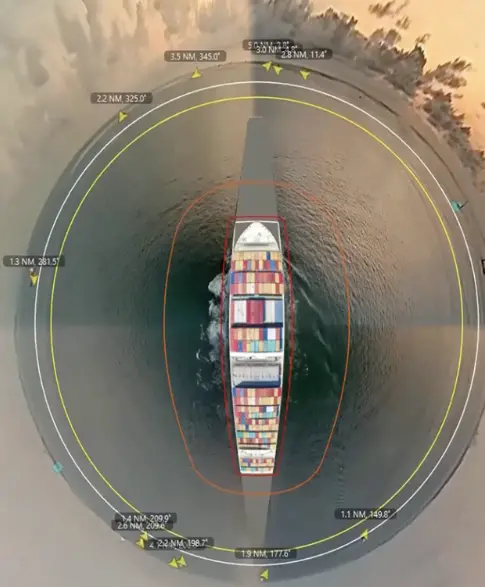
The system includes a 360-degree bird’s eye view of surroundings with a fisheye camera on the bridge wings. A 4-camera setup displays vessel sides, with the 6-camera set-up adding views ahead and astern.
Visual distance markers and safety boundaries help crews to assess clearance during berthing.
The system also connects navigational events to Orca AI’s FleetView platform, enabling shore-based teams to review incidents, identify recurring risks and use operational data to support crew training.
BerthView is available for retrofit on vessels already in service, as well as offering potential for integration into newbuilds.
“Autonomous shipping will be built by integrating advanced technologies into the vessel as one intelligent system,” said Hyun Joe Kim.