
US offshore wind sector sees ‘road to recovery’ after Trump battering
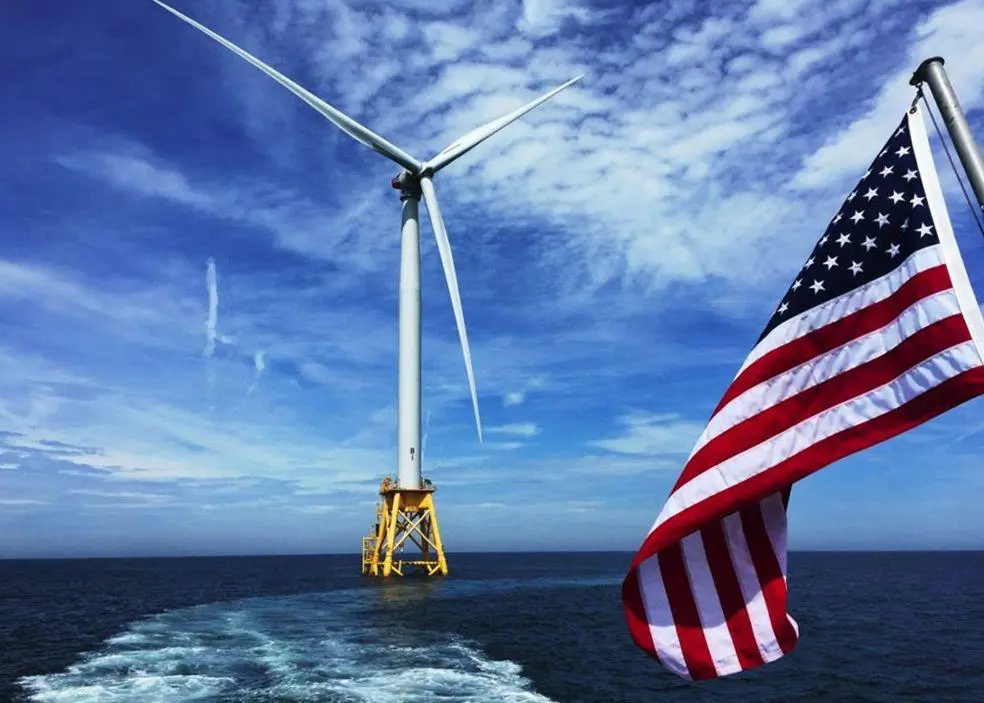
Stakeholders in the US offshore wind sector have said Donald Trump’s recent mauling in the midterm elections could set it back on the road to recovery – and signal opportunities for Europe.
With the Democrats winning both chambers of Congress last week, hopes have been raised that the current administration’s efforts to halt development will face a much stronger political challenge.
Oceantic Network, the US offshore wind industry’s trade association, said the election result offered a new opportunity to tackle what it described as federal agency overreach and restore confidence in a market that has been battered by political intervention, project suspensions and lease cancellations.
“The road to recovery for the embattled American offshore wind industry starts today with a new political mandate to tackle the affordability crisis,” said Liz Burdock, president and chief executive of Oceantic Network. “The incoming Congress has both a directive and the tools to rein in agency overreach. When families are struggling with the high cost of living, the last thing Washington should be doing is stopping affordable clean energy projects and ripping up agreements to bring more power online.
“Bringing down energy costs means investing in and permitting a true, ‘all-of-the-above’ energy policy alongside the development of a robust grid and transmission network that get power to the people who need it.”
The American Clean Power Association (ACP), which represents the wider renewable energy sector, also called for the new Congress to prioritise permitting reform. Its chief executive, Jason Grumet, said voters had made clear that affordable and reliable power was a priority, while the association said modernising approvals could unlock more than $800bn in infrastructure investment and 350GW of energy capacity.
Trump’s well-known disdain
Donald Trump has made repeated attacks on wind energy, ordering a withdrawal of all areas of the US Outer Continental Shelf from new offshore wind leasing on his return to office in 2025, pending a review of federal leasing and permitting practices.
“We don’t allow windmills,” he said in August that year. “We’re not allowing any windmills to go up unless there’s a legal situation where somebody committed to it a long time ago.”
In March 2026, he told an event at the White House: “I can proudly say that we have not approved one windmill since I’ve been in office. And we’re going to keep it that way. My goal is to not let any windmill be built. They’re losers.”
He also urged Europe to ‘stop the windmills’.
“You’re ruining your countries,” he said. “It’s so sad. You fly over and you see these windmills all over the place, ruining your beautiful fields and valleys and killing your birds. And if they’re stuck in the ocean, ruining your oceans. Stop the windmills.”
His administration has sought to halt or reverse offshore wind development through leasing restrictions, project suspensions and agreements to relinquish leases. Five projects that were already under construction were paused in December 2025, although legal challenges subsequently allowed work to resume.
Oceantic has described the administration’s actions as damaging to investment, jobs and energy supply. In December 2025, following the construction pause, Burdock said the move was ‘another veiled attempt to hide the fact that the president doesn’t like offshore wind’.
The midterm result therefore offers the industry a possible counterweight to a president who has made his opposition very clear.
Opening for European expertise
A more favourable political climate in the US could also create opportunities for European offshore wind developers, engineering businesses, vessel operators and equipment manufacturers.
European companies have a substantial experience advantage in offshore wind. The industry has been developing across the North Sea and Baltic Sea for decades, building expertise in turbine installation, subsea cables, foundations, offshore substations, specialist vessels, port infrastructure and long-term operations and maintenance.
The European Union had around 21.6GW of installed offshore wind capacity by the end of 2025, while the wider European offshore wind market is considerably larger. European businesses have consequently developed supply chains and technical capabilities that the comparatively younger US market is still working to establish.
The New York State Energy Research and Development Authority (NYSERDA) has recognised the potential contribution of overseas suppliers, saying that the European supply chain is well positioned to serve the US market through investment in local workforce, infrastructure and technology.
“As the pipeline of US offshore wind projects continues to mature, the supply chain that is currently located in Europe will position itself to efficiently serve the US market through investments in local workforce, infrastructure, and technology,” it says. “New York companies are in an ideal position to capitalize on these economic opportunities, which will not only create new local jobs but also reduce the cost of offshore wind energy.”
The election has not yet delivered a new wave of contracts or guaranteed the revival of stalled projects, but after years of hostility and uncertainty, the industry has a reason to be more optimistic.