



Bulgaria launches €350m tender for reservoir and pumped-storage
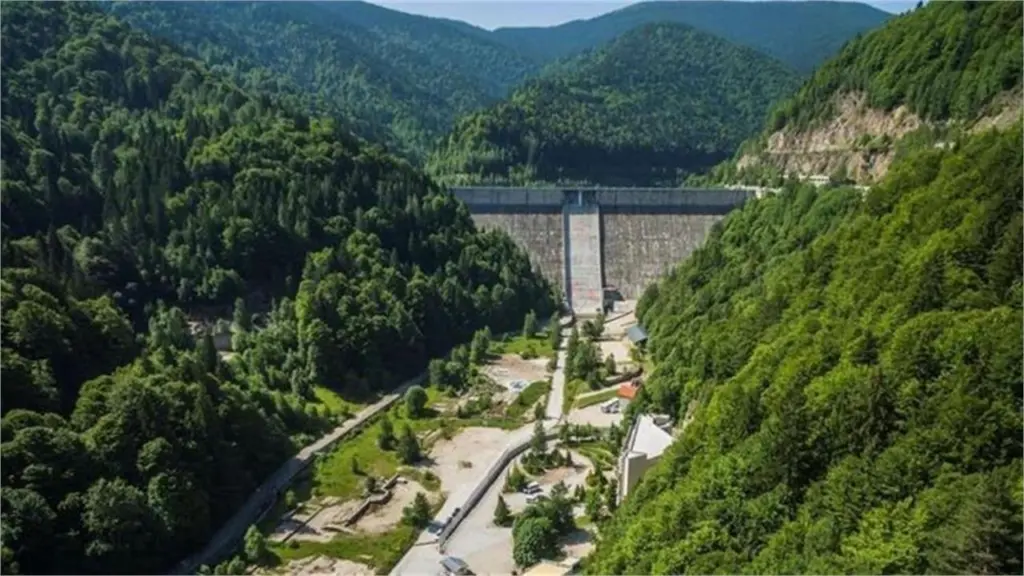
Bulgaria has launched a €350 million tender for a new reservoir and major hydropower expansion.
The Yadenitsa project will increase storage capacity and operating flexibility at the existing Chaira pumped-storage hydropower plant (PSHPP).
The tender, issued by state-owned National Electricity Company (NEK EAD), covers construction of the new reservoir and dam, a reversible pressure tunnel linking it to the existing Chaira reservoir, and a range of associated hydraulic, geotechnical and infrastructure works.
The contract scope includes the main dam and associated structures, an injection gallery, shaft spillway, discharge gallery, chute and energy dissipator, bottom outlet, instrumentation and monitoring systems, and a small hydropower plant using environmental flows.
The works also include construction of the reversible pressure tunnel and its associated hydraulic structures, as well as reservoir-bank protection, landslide stabilisation, erosion control, electrical connections, access roads and supporting infrastructure.
Engineering: A new reservoir and 6.75km tunnel
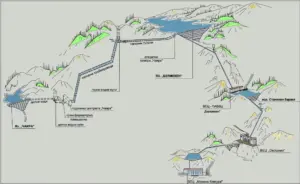
The central element of the project is the construction of Yadenitsa reservoir, which will be hydraulically connected to the existing Chaira reservoir through a 6,750m-long reversible pressure tunnel with a diameter of around 7m.
The development is intended to increase the usable storage volume of the lower reservoir system from around 4.2 million m3 to 13.4 million m3, providing an additional 9.2 million m3 of usable storage.
“The facilities planned for construction under Yadenitsa Project will create a system of connected vessels, which will increase the usable volume of the lower compensating basin of Chaira PSHPP from 4.2 mln m³ to 13.4 mln m³,” says NEK.
The tunnel will allow water to move between the two reservoirs in both directions, supporting the pumping and generating cycles of the existing power station. Associated infrastructure includes the Yadenitsa intake structure, surge shafts at Yadenitsa and Chaira, an access window to the tunnel, and systems for filling and emptying the waterway.
The dam is designed as a rockfill structure with an asphalt-concrete diaphragm providing its watertight element.
The works involve a substantial range of geotechnical and hydraulic engineering challenges. The tender specifically identifies reinforcement of the reservoir bank in the area of the Yadenitsa fault, stabilisation of a landslide near the temporary explosives storage area, and erosion protection of slopes around the dam’s energy dissipator and access roads.
The contract also includes correction of the Yadenitsa River downstream of the dam, a monitoring and measurement system for the new structure, and a 20kV electrical connection with standby supplies.
“Its implementation will significantly expand the operational capabilities of Chaira PSHPP in both pumping and generating modes and will contribute to the more efficient utilisation of the existing hydropower infrastructure,” said NEK.
Increasing the value of existing hydropower assets
Yadenitsa is intended to expand the capabilities of the existing Chaira pumped-storage plant rather than create an entirely new generating station.
Chaira forms part of Bulgaria’s Belmeken-Sestrimo-Chaira hydropower complex and provides an important source of electricity storage and system balancing.
“The project is of strategic importance for the long-term storage of electricity and for enhancing the flexibility of the electricity system as the share of generation from renewable energy sources increases,” says NEK.
The additional reservoir capacity is intended to support longer operating cycles, moving towards weekly operation rather than being constrained by the shorter cycles associated with the existing lower reservoir capacity. This should improve the plant’s ability to absorb surplus electricity and deliver power when required, supporting the integration of wind and solar generation.
The strategic importance of the development has also been recognised at European level. In April 2026, Yadenitsa was included in the European Union’s second list of Projects of Common Interest, under reference 2.21.