VIDEO FEATURE: Bringing in the giants at the UK’s biggest port
Like all ports, Harwich Haven Authority, in the east of England, is facing a rapidly changing maritime environment.
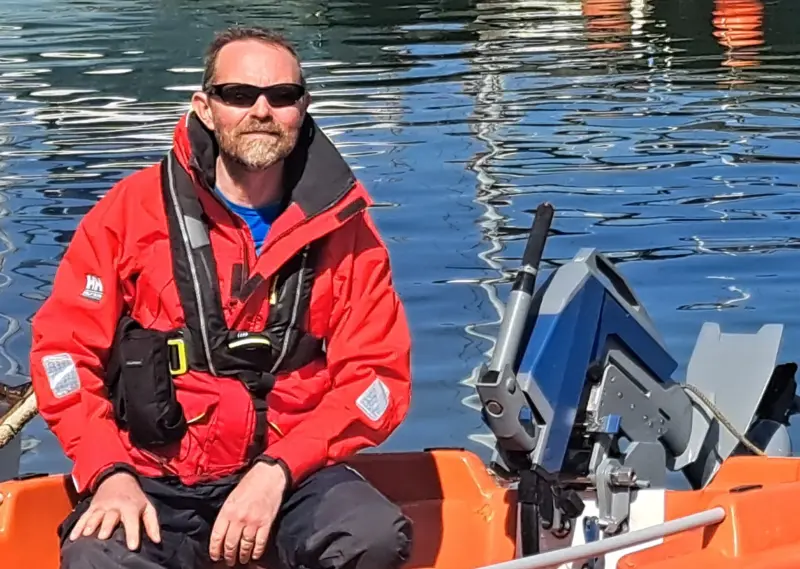
From ever-larger ships and new fuels to offshore wind, autonomy and digitalisation, marine director and harbour master Will Barker is determined to be involved with it all from the outset, so that he and his team are fully equipped to be make the changes work for the five ports of the HHA and their customers.
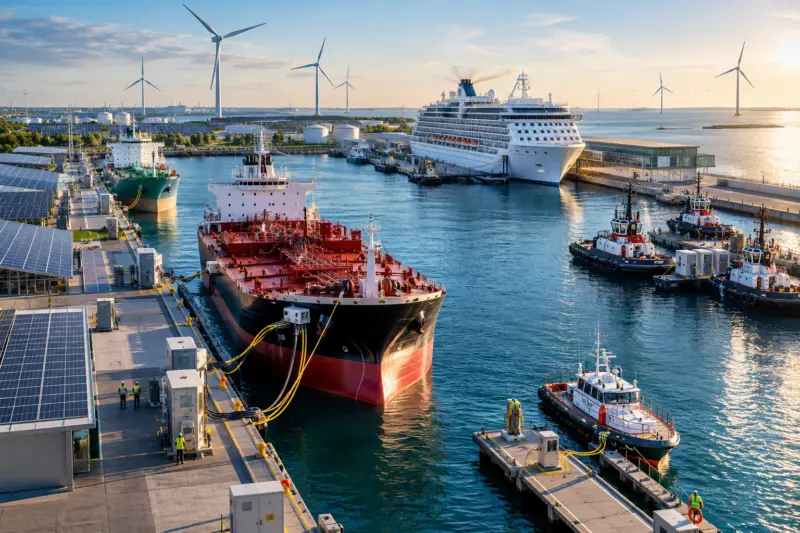
The HHA is the statutory harbour and pilotage authority for the wider Haven, in which the commercial ports sit: the Port of Felixstowe (the UK’s largest container port) and Harwich International Port, both operated by Hutchison Ports; Harwich Navyard, a private Harwich Dock Company operation; the Port of Mistley, a smaller commercial facility; and Ipswich, operated by Associated British Ports.
As cargo vessels grow, HHA has to make sure the ports grow with them: it has already invested £130 million in deepening its approach channel, taking it from 14.5 metres to 16 metres below chart datum. Some of the largest vessels are now arriving with drafts of more than 16 metres when the tide is taken into account.
Increasingly, however, the answer to the challenges created by larger ships is not simply to build more infrastructure. It is to use better information and technology to make better decisions during operations.
That approach extends well beyond navigation and HHA is considering how it can support a multitude of new trends – such as alternative fuels, electrification and offshore wind – while developing its own workforce and looking at what autonomy could mean for its future.
Digitalising the harbour
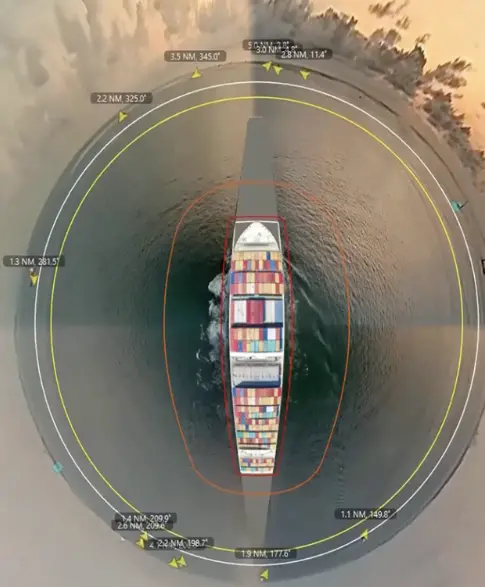
The control room at HHA’s Vessel Traffic Services operation already sits at the centre of the harbour’s navigational activity. With ships of up to 300,000 tonnes moving through relatively constrained water, timing and coordination are critical.
A large container ship arrives with a pilot on board, is coordinated by the VTS area and meets the necessary tugs before negotiating the channel while the authority constantly monitors weather, tidal conditions, available water, pilotage, towage and the movements of other vessels.
And in what it calls a first for ports in the UK, HHA is now developing a ‘Capella’ digital twin with technology firm Entopy to bring more of that information together.
Shipping giant CMA CGM is already working with HHA to use the system, which pulls information from the towage operation, Felixstowe, HHA itself and real-time weather forecasting and then uses a series of smaller models to consider individual elements such as pilotage, towage, crane operations and estimated times of arrival and departure.
The objective is to create a more complete picture of what is happening across the harbour and provide useful advice to the people managing it.
“It’s constantly being updated with what’s actually happening and it’s making recommendations based on what it’s being fed,” says Barker. “We’ve got different channels – we have a Teams channel, we’ve got emails and we’ve got the live system. There’s a handover risk when one ship comes in and another one leaves, and we have something called an operational brief that says what’s going on.
“It’s decision support rather than anything else: not just dealing with navigational safety, which is our primary function. It’s about optimising the business model. So rather than making navigational safety decisions, the DHI NCOS system that we will be using for dynamic under-keel clearance and tidal optimisation will directly feed into navigational safety.”
At the moment, a standard 10% allowance is applied to ships. For a vessel drawing 16 metres, that means a minimum 1.6-metre clearance within the passage. Dynamic under-keel clearance can instead consider the characteristics and behaviour of the individual ship, including how much it is likely to pitch and roll and its trim.
HHA is developing the system using DHI’s NCOS product and Barker says it will be among the first port in the UK to use dynamic under-keel clearance.
It is an example of how the authority is responding to the increasing size of ships without simply assuming that the only answer is to keep dredging.
The digital work also has an environmental dimension. If a ship’s berth is not going to be ready when expected, the information can allow the vessel to slow down rather than steam towards the port and wait. That means lower fuel consumption as well as better berth and vessel use.
“We’ve got a case study we’re working on at the moment with CMA CGM,” Barker says. “If we know that the berth’s not going to be ready when they think, they can slow down a bit and save some fuel.”
Preparing for new fuels
Barker is taking the same approach to the looming future fuel labyrinth and other new technologies.
HHA has already moved its pilot boats to HVO and is considering what other technologies could work across its fleet, but Barker acknowledges that HVO is more expensive than conventional diesel and its true source also requires careful consideration.
The authority is also looking at shore power and future fuels, but Barker does not see a single technology emerging as an obvious answer for every application.
Methanol is already part of the conversation, and HHA recently received OOCL Wisdom, a new methanol-capable vessel. Barker sees the arrival of such ships as an opportunity to understand what the changing fuel mix will mean for the port.
The question of bunkering will become increasingly important if more vessels arrive with methanol-capable engines. Rotterdam already offers methanol bunkering, and HHA is considering whether it should at some stage offer the same.
There is existing tank storage and a jetty capable of handling product tankers at Harwich International Port, although the economics remain dependent on demand.
“It’s a bit chicken and egg because not many people want methanol at the moment,” Barker says. “You could start producing it but it’s very expensive in the UK because electricity is expensive, so that whole business case needs to add up.”
Other fuels create different challenges. Barker sees ammonia as presenting much trickier safety implications for bunkering, while hydrogen has challenges around storage and energy density. He believes hydrogen may have more potential for smaller vessels than for large deep-sea ships.
HHA is therefore looking at how different technologies could be applied rather than trying to predict a single winner.
When it comes to electrification, for example, the authority cannot currently buy an electric pilot boat capable of carrying out its full existing operation because of the distance involved. Pilot boats may have to travel 45 minutes to an hour offshore, transfer a pilot and potentially have to wait before returning – and the range is not yet sufficient.
Rather than dismissing it, though, HHA is looking at separating different activities. Harbour patrols, personnel transfers and lights checks could potentially be carried out by smaller electric vessels, while the longer-distance pilotage work could remain with a different type of boat.
For HHA, the important point is to make sure that the transition is practical and that environmental claims stand up to scrutiny.
Offshore wind and a changing harbour
The energy transition is also creating new business and new marine traffic around Harwich Haven.
The North Sea is increasingly populated by offshore wind projects, and HHA is involved with developments such as North Falls and Five Estuaries. The authority is working with developers on cable routes and development consent processes, with the safety of navigation a central concern.
That is becoming increasingly important as different types of traffic operate in the same waters. A large container ship, a ro-ro vessel and a crew transfer vessel have very different characteristics and requirements: crew transfer vessels do not need the same water depth or tug assistance as a Megamax container ship, but they still operate within the VTS environment and HHA remains responsible for managing the safety of navigation. The authority has been looking at things like the wake generated by CTVs and whether they can use alternative routes when larger ships are moving through the main channel.
And as offshore wind farms move further offshore, the vessels supporting them are also becoming larger and more sophisticated, which HHA sees that as an opportunity to diversify its activities.
Bathside Bay, which already has consent for development, was originally envisaged as another container terminal. The current plan is for it to become an energy facility supporting the construction and development of offshore and renewable energy projects.
That provides HHA with an opportunity to support the sector during the construction phase then adapt its use as the projects move into operation.
The authority is also developing the idea of a ‘blue innovation zone’ that could include digital products, alternative fuels, species and habitat protection and the beneficial use of dredged material.
The ambition is to bring together shipping companies, universities, government and other organisations to test and develop solutions in a real operating environment.
Building the workforce
HHA has an apprenticeship programme covering marine operations, engineering and IT. Its two-year marine apprenticeship trains people for roles including workboat crew, coxswains and masters, while the authority also takes marine engineering and IT apprentices.
Barker sees three reasons for the programme: meeting HHA’s own future requirements; helping address a wider shortage of maritime skills; and providing opportunities for local people.
“We train more people than we need,” he says, recognising that some will eventually leave HHA for other parts of the industry.
The approach is also about broadening the routes into maritime careers.
The traditional pipeline into pilotage has relied heavily on people spending years working on large ships. With fewer people now working at sea, that pool is smaller.
At the same time, the skills required in a modern VTS operation are broader than traditional marine experience alone.
VTS staff need to understand navigation and safety, but they also work with shipping agents and customers, coordinate operations and help solve problems.
HHA is therefore looking at different pools of potential employees and trying to make the industry more visible to people who may not previously have considered it.
Safety in a changing environment
For all the investment in new technology, safety remains at the heart of the operations.
The largest vessels require pilots, VTS coordination and tug assistance, with the operation designed to avoid a single point of failure. HHA also surveys the harbour according to risk: areas where the seabed changes frequently and large vessels operate are surveyed much more often than areas where little changes and there is little traffic.
Pilot transfer remains one of the clearest examples of the balance between old and new.
HHA uses increasingly sophisticated portable pilot units and positioning technology, but the pilot still has to climb a ladder from the launch to the ship.
“We talk about our portable pilot units and what we’re doing with all of that technology and we are at the forefront of driving the technology,” Barker says. “Yet we tie ships up with rope and still climb up rope ladders out at the sea. And that’s not changed since Roman times.”
With pilot safety the focus has shifted to controlling the consequences rather than the initial risk: HHA will not undertake a pilot transfer unless it is confident that there is a good chance of recovering anyone who falls into the water. Pilot launch crews are trained in recovery, communications are tested and appropriate PPE is used.
The same approach will be necessary as autonomous vessels become more common.
Barker expects autonomy to develop at different scales, from small, unmanned survey vessels to large ships using autonomous systems for functions such as collision avoidance and passage planning.
HHA is keen to be involved in developments such as remote pilotage assistance and remote monitoring. But the authority is also considering the vulnerabilities that come with greater reliance on technology.
Digital and autonomous risks
Modern ships and navigation systems increasingly depend on GNSS. HHA’s portable technology can provide centimetre-level positioning and accurate rate-of-turn information, but that creates another question: what happens if the positioning system fails or is disrupted?

Cybersecurity is part of the navigational safety discussion.
So too is the way autonomous vessels interact with conventional shipping. Barker points out that a vessel may be designed to operate autonomously but still have a person on board, creating uncertainty for other ships about how it should be treated.
“The last thing I want is an oil tanker avoiding a piece of plastic with no people on board and then running a ground and causing a disaster,” he says. “Whereas if that piece of plastic is a family of six people on board, I’d rather it ran aground.
“There are bits of kit designed to be autonomous, but you can put a person on board and other vessels might not know. There’s definitely a journey around understanding that and collision regulations.”
The authority isn’t adopting tech simply because it’s shiny and new. It is considering what the technology can do, where it makes sense, what risks it introduces and how those risks can be managed.
The same applies to future fuels, electrification, offshore wind and the increasing size of ships.
HHA’s role remains fundamentally the same: to enable vessels to navigate safely and to maintain the waterway on which so much of the UK’s trade depends. But the tools, vessels and industries around it are changing.
“It’s about being at the front of a journey and seeing things as opportunities,” Barker says.