



Unlocking offshore wind potential: Fugro
The offshore wind industry stands at a critical juncture, expected to achieve increasingly bold clean energy targets whilst continuing to build stable supply chains with the necessary capacity, efficiency and cost effectiveness to deliver, says Fugro global director Offshore Wind Brian Bell.

The industry is still relatively young but is rapidly having to address a wide range of planning, development and construction challenges that must be overcome if our global clean energy ambitions are to be met.
Dealing with rising costs
Business cases for large civil infrastructure projects are finely balanced, and offshore wind is no different. It is widely reported that wind farm development costs have risen by up to 40% over the past two years, causing many projects to be reassessed and paused or even abandoned due to a lack of financial viability. In particular, increases in raw material prices such as steel, copper and rare earth elements have impacted the cost of primary components such as turbines, foundations and cables, which together represent 60-70% of total wind farm costs.
For a wind farm to recover these initial costs and deliver a suitable return on investment, it must operate reliably for several decades. As with development and capital expenditure, it is an equal challenge to ensure that operational expenditure budgets – another 15-20% of total costs – are sufficient for the competing demands of inspection and maintenance, but without jeopardising operational or financial performance.
Looking ahead, a key priority for the industry will be proactively working together to mitigate the impact of these pressures and embracing opportunities for technology to support a downward cost trajectory – from intelligent data insights and informed decision-making to standardisation and scalability. A renewed focus on long-term planning, early engagement and innovation will help to address current inflationary challenges and encourage growth in emerging sectors such as floating wind.
Supply chain issues
The supply chain for much – if not all – of the offshore wind sector currently faces similar pressures to developers and operators. Suppliers have their own supply chains, which have been affected by inflationary cost increases, component shortages and schedule conflicts. They also face similar financing challenges concerning the rising cost of capital, increasing market uncertainty and the need to spend wisely to generate suitable returns on investment.
A renewed emphasis on building more trust-based relationships could alleviate these issues. As the industry matures and explores new territories, technologies and financial models, we will likely see stakeholders increasingly recognising the value of building shared knowledge and experience without the imposition of prescriptive or one-sided requirements.
We are already seeing a shift towards closer collaboration and increasing transparency to meet desired performance outcomes together. And with more collaborative approaches – which acknowledge the perspectives and aspirations of all participants – empathy, trust and grit can become catalysts for success.
Ambitious targets
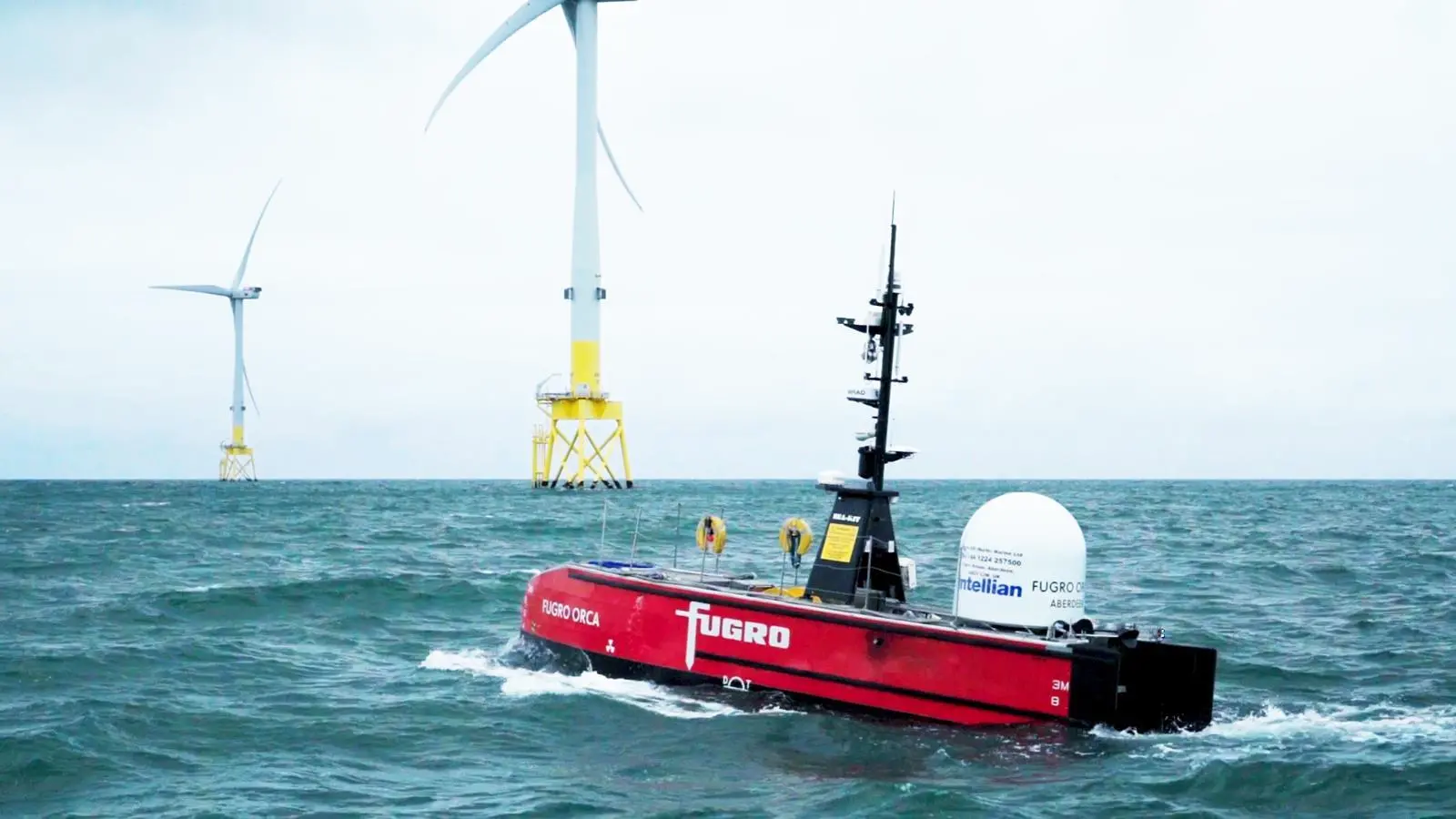
According to ClimateWatch, as much as three-quarters of global emissions come from energy production. To reduce this impact and help meet the targets set by the Paris Agreement it is estimated that between 2030 and 2050, we need to add 70GW of offshore capacity every year, equating to anywhere between 3,000 and 5,000 turbines every year for 20 years, based upon foreseeable turbine sizes.
Floating wind is expected to become a significant contributor to this ambition, because it allows us to develop wind farms in deep water areas that are unsuitable for fixed-bottom structures.
Although floating wind farms currently represent less than 0.5GW of installed capacity, industry sources such as the Global Wind Energy Council estimate that 5 to 8GW could be online by 2030 and 250 GW by 2050.
The prospect of floating wind becoming mainstream involves a steep learning curve with many engineering challenges yet to be resolved, but the performance of numerous demonstrator sites shows huge potential, and the determination of everyone involved is encouraging.
Rising costs, supply chain struggles and ambitious targets are major challenges for the offshore wind industry – but they can all be overcome with the right skills and relationships.
In the coming years, the industry’s success will hinge on its ability to address these challenges collectively.