
Leading the charge: Bibby on its electric fleet
The world is electrifying, and UK-based Bibby Marine is determined to be at the forefront of the drive. But it won’t happen offshore without offshore charging, says project director Gavin Forward.
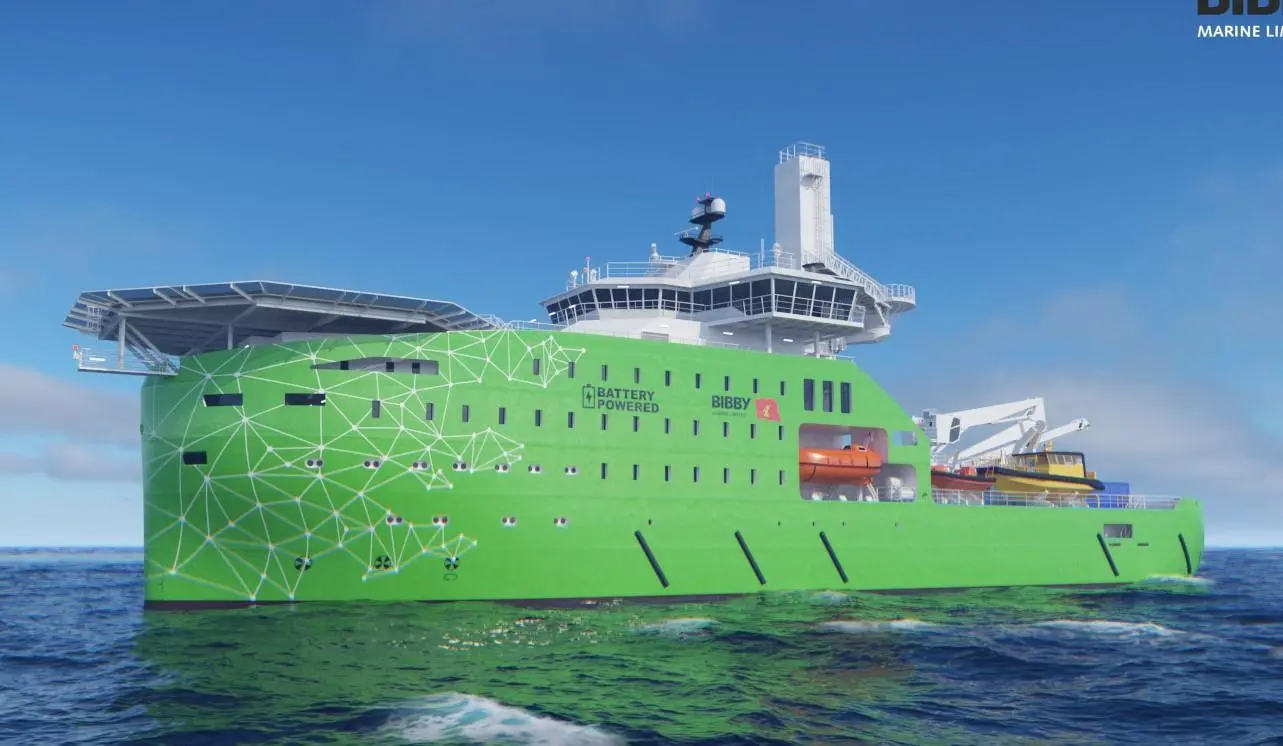
With its new electric CSOV leading the charge, Bibby Marine is convinced that offshore wind support vessels will all eventually go electric – and that could be as soon as the next 10 years.
Gavin Forward, project director for the company’s first zero-emissions vessel, says the eCSOV being built by Spanish shipyard Armon will be the first of at least three with full electric capability.
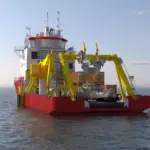
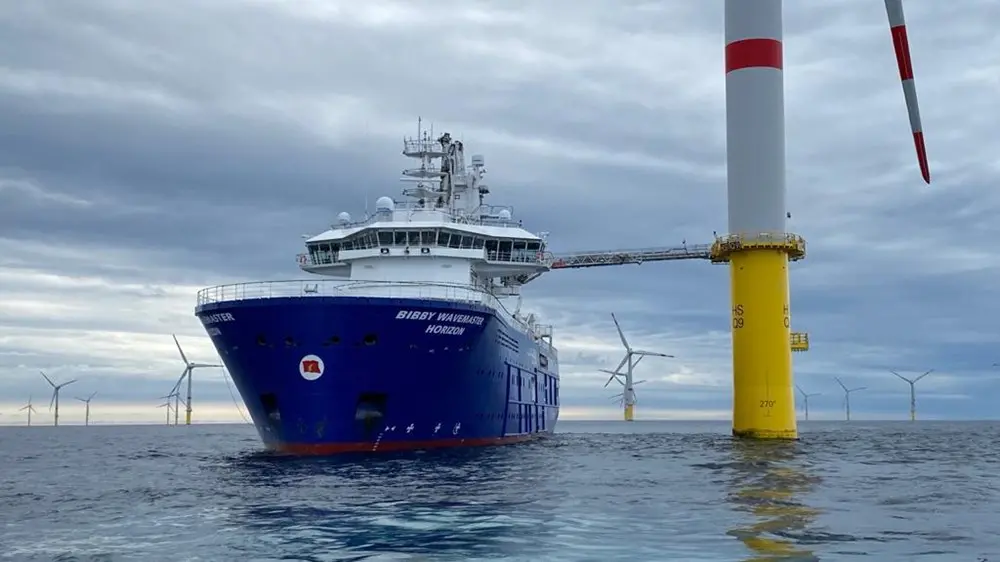
At the moment, Bibby Marine’s Wave Master fleet comprises just two vessels: Wavemaster Horizon and Wavemaster 1.
Their speciality, says Forward, is that they were the first dedicated assets of their type to be introduced to the market: dedicated, walk-to-work support vessels as opposed to standard vessels that had the gangway equipment mobilised on them.
“The first was launched in 2017, the second in 2019 – these were dedicated assets, with dedicated accommodation, a 3D gangway and a 3D crane, for the purpose of putting personnel on an offshore wind turbine or an offshore installation,” he says.
“Before, they would mobilise equipment onto the back deck of a standard sort of vessel. So we think we’re pioneers in the dedicated assets.”
Indeed, both vessels are still going strong in the North Sea, one on a long-term contract with Siemens Gamesa, the other on the spot market, Forward says.
But the new one, the zero-emissions eCSOV, will be different again.
Ground-up design
“We’ve modelled our new vessel on the existing ones, but it’s essentially a completely off-the-ground design, a purpose-built vessel for the offshore wind market, a zero-emission, dedicated battery vessel,” says Forward.
“We’ve got a large battery pack, a 25MWh battery pack, that gives us a full day’s operation on the battery, modelled on the existing fleet and the operations they do. We looked at how many connections we’d make to a gangway each day, how far we’d transit in the field between turbines, how long we’d need to charge, and we modelled the battery based on that.
“We realised we would need around 16 MWh of power per day, which then led us to the battery size of 25MWh to give us the required lifespan plus a bit extra contingency. We charge it overnight for five to six hours off a wind turbine charging system, and we can sail between 100 and 130 nautical miles on the battery – depending obviously on the weather conditions. The higher sea state, the less time we have.”
Gavin Forward says the batteries, which are being supplied by Canadian marine battery supplier Corvus Energy, are the lithium iron phosphate type – or LFP.
Source: Bibby Marine
Wavemaster Horizon
They don’t contain the cobalt that other lithium-ion batteries need, which is highly contentious in being mined by children in the Congo.
They also don’t have the fire risk, and where they lagged behind in terms of lifespan a few years ago, this has now been developed and increased, Forward says, which makes them commercially viable, especially since the cost has come down so much.
There have to be engines, and these will maintain the zero-emissions envelope by being green methanol, Forward says.
“We see that in future iterations, maybe 10 years down the line, you could operate a vessel just on the battery for this market. But because we don’t have guaranteed offshore charging, or shore charging, we’ve had to be flexible, and that’s why we’re delivering a vessel with dual-fuel engines – green methanol if it’s available.
“But it’s offering our client flexibility – they can run off batteries if there’s offshore charging, which is the best scenario all round for emissions and cost, but in the interim period we can run on engines. The way the vessel’s designed it will be the engines brought on board to charge the batteries, unlike a traditional hybrid system, where the batteries would supplement the engines.”
Offshore charging obstacle
Bibby Marine is working with offshore charging providers such as Stillstrom and Maersk on technical collaboration agreements to ensure the technology is there for the Bibby boats to use.
“They’re very aligned with what we’re doing, our vessel is fully in line with the technical equipment, so we’ll be fully ready to charge on day one when we leave the shipyard if they have the equipment available,” he says.
“I’ve been speaking to some suppliers in recent weeks, who’ve said they’re having their first equipment manufactured within the next year, so I think the biggest hurdle is governmental and commercial, the drive from the industry to put the equipment into the turbines.
“It’s not technical – technically and practically, everything can be done, the technology’s there, it’s proven technology, the designs that they’ve got on the table, they’re all class approved, ready to go.
“So if the Crown Estate said that all new wind farms on the UK continental shelf should have offshore chargers, then this is what would drive the industry to change to electrification because the technology’s there.”
Ideally the technology would be installed as the wind farm is put up, rather than being added after the event, as this would not have been part of the CAPEX. But it’s something of a chicken-and-egg situation, Forward says.
“The only thing that’s stopping this is a push. Nobody’s going to do it for no reason. If nobod’’s got electric vessels, nobody’s going to put charging systems in. So we’re kind of breaking the mould here. And we’re talking to everyone, fully involved in the whole picture.”
Standardisation
One of the issues with electric vehicle charging is that not all charging is the same, with three main types – CHAdeMO, CCS, or Type 2. If the charging station in a town has the wrong type, it would not normally be a disaster to find the right on elsewhere, but on a wind farm this is impossible.
“With a car, you’ve got different voltages and high charging, rapid charging,” says Forward. “We have 11kV AC charge, up to six megawatt hours, which is thousands of times more capacity than a car. And that’s a standard, across all the people we’ve spoken to, that’s what they’re delivering.
“In terms of the actual connection cable, they’re working to standardise that as well, because at the moment there’s no offshore rules or regulations around the actual charging cable and how that works.
“There is for the shoreside, there will be a notation on the vessel from a classification society, but the offshore one doesn’t exist. We will probably be the first vessel to have that, and we are working closely with DNV to develop that notation, how it will work and what standardisation it will be.”
Future fuels conundrum
Before Forward started at Bibby Marine the company, he says, had already looked a lot into alternative fuels.
“We looked at all types of new technologies, fuel cells, etcetera, we looked at hydrogen, we looked at ammonia, hydrogenated vegetable oil (HVO) – they’ve all got advantages and disadvantages. HVO, for instance, isn’t really clean because you have to grow a lot of agriculture to supply that, which has its own environmental issues and impact.
“And it came out that the battery-hybrid combined with the methanol fuel system was the most feasible, and both parts were readily available on the market today. Although you have to take additional precautions and there’s a lot of design into how the methanol tanks are located and how the methanol is vented off, and there are additional systems and safety to put it into the vessel, comparing it ethanol or ammonia, it’s much safer. Methanol is much safer, hydrogen hasn’t got the energy density – we have the tanks to sail on methanol for 30 days.”
The problem is availability and cost – which is three to five times the price of standard diesel oil.
“No one in their right minds is really going to do that unless there’s a drive, again, which goes back to government.”
And if none of the alternative fuels was available, a back-up diesel option would still be cleaner – as long as offshore charging was in place, Forward says.
Forward fleet
Bibby’s short-term focus is to ensure the fleet is fully utilised, says Forward, which it is at the moment, but it plans to put tenders out for another two or three vessels – effectively doubling the fleet.
The eCSOV was part funded by government to bridge the gap between the cost of a standard vessel and this new design, with the battery pack and methanol engines quite a price jump.
“The government funding bridged that gap, and the next three will be a revised version where we’ve taken down the price while still maintaining pretty much the same operability but at a reduced price by reducing some of the equipment specifications, which means we’re more competitive.”
The other offer to clients, if there’s charging available, is the slash in costs of up to a fifth. With inevitable government taxes and emission taxes from the EU that are going to be coming in, a vessel that can run on a fifth of the fuel price will not go unnoticed.
Methanol, Forward admits, will probably not be installed on the next iteration of vessel because of the uncertainty over availability.
“If we can’t ever get it and it’s up to five times the price, then nobody’s going to use it,” he says. “So we’re focusing on our core design, which is the battery and electricity and driving that change to have the offshore charging, which makes sense to the whole market.”