




Europe under threat: report outlines risk to coastlines
European coastlines have come under the spotlight in a new report published by the European Marine Board IVZW (EMB).
Building Coastal Resilience in Europe is a 128-page document (including 20 pages listing sources) written by members of the EMB’s Working Group on Coastal Resilience, which includse European universities, the British Geological Survey, the Italian National Institute of Oceanography and Applied Geophysics, the French Research Institute for Exploitation of the Sea (IFREMER) and the Royal Netherlands Institute for Sea Research (NIOZ).
Partly funded by the European Commission, the report seeks to ‘develop common priorities, advance marine research to bridge the gap between science and policy to meet future marine science challenges and opportunities’.
“Building resilience to coastal pressures is a journey we must embrace to ensure that coastal communities and ecosystems can persist, adapt or transform when faced with disturbances, while maintaining essential functions,” says chair Gilles Lericolais.
“Coastal protection and risk reduction measures are required to minimise the impact of continued sea level rise, storm surges, coastal flooding and erosion along Europe’s coastlines. Coastal protection is an important component of resilience during weather disasters and coastal protection infrastructure helps to minimise damage and support recovery.”
Grey, blue and green infrastructure
The report suggests a range of what it calls ‘grey infrastructure’, by which it means conventional building; ‘blue-green infrastructure’, by which it means natural measures; and hybrid solutions to protect Europe’s coast.
“Grey infrastructure has historically been a preferred strategy because it delivers the most predictable levels of protection against coastal extremes and climate risks in specific locations,” it says.
“However, it has been used widely without any a priori knowledge of the ‘local’ or ‘regional’ coastal processes operating in the area. This leads to unintended consequences in adjacent coasts, including geomorphic and ecological impacts such as sediment deficits and chronic coastal erosion, beach lowering, blocking of natural littoral drift (ie the natural movement of sediment along the shoreline), habitat and biodiversity loss and coastal squeeze (ie the loss of natural habitats or deterioration of their quality arising from anthropogenic structures or actions, preventing the landward transgression of those habitats that would otherwise naturally occur in response to sea level rise in combination with other coastal processes).
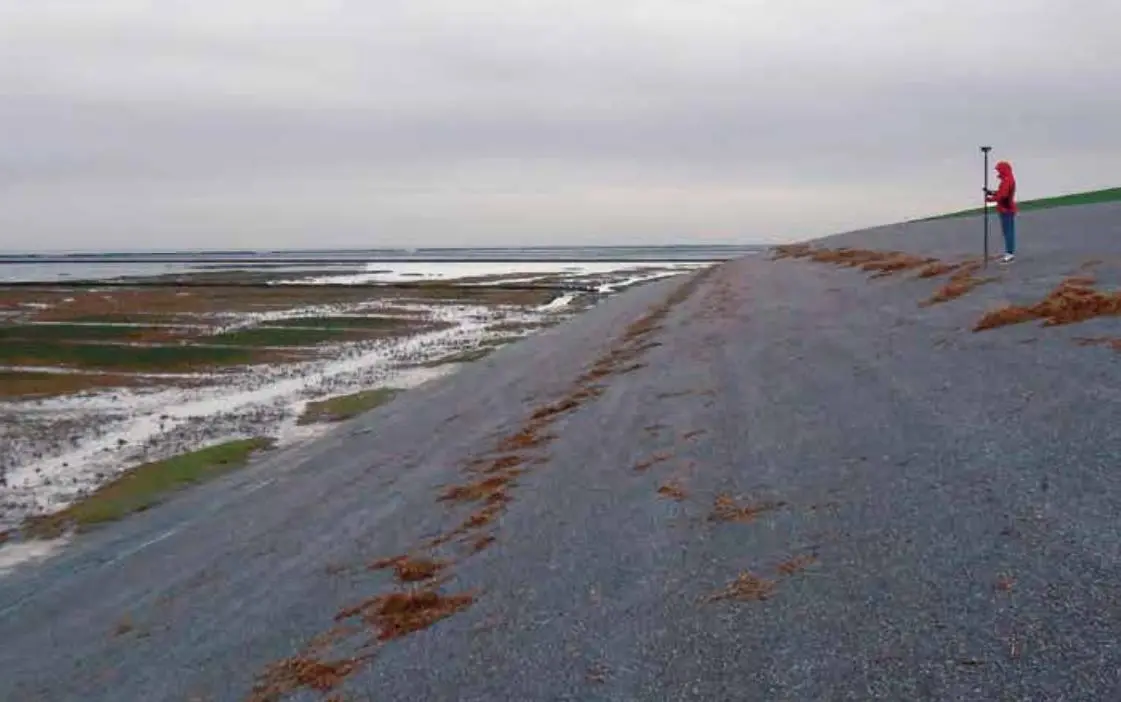
“Therefore, grey infrastructure can be both a barrier and an enabler to enhancing coastal resilience. It may provide a false sense of security and, over time, fail to adequately protect coastal communities and infrastructure from winter storms and sea level rise, specifically if the infrastructure is not maintained and upgraded to account for future climate change.
“Building infrastructure that can fail catastrophically will reduce long-term coastal resilience as the rate of environmental change accelerates, creating a greater likelihood of failure.
“There is a growing requirement for grey infrastructure to be multi-functional, sustainable, resilient and to work with nature to provide ecosystem services.”
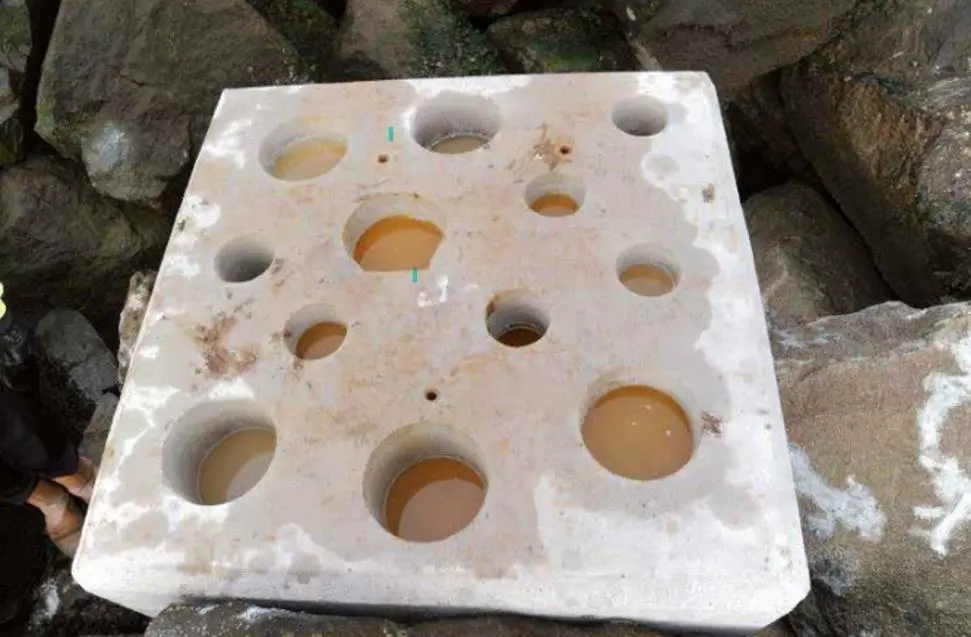
The report gives examples of mitigating the effects of ‘grey infrastructure’ such as placing ‘bioblocks’ around the coast – ’a habitat enhancement unit that creates artificial pits and rock pools to provide habitat for native species’.
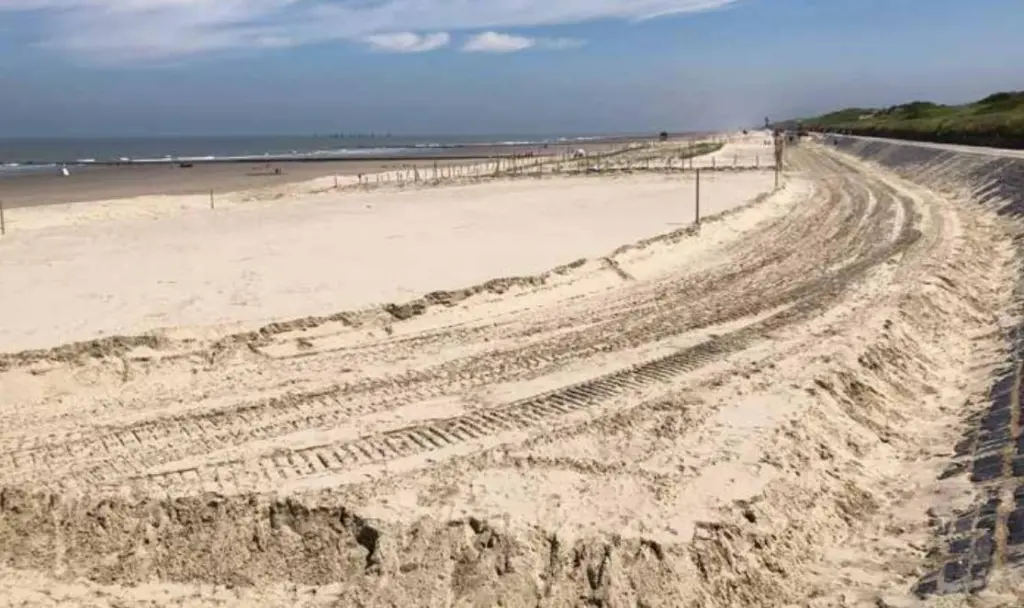
Another example is spreading more sand dunes along the coast to obviate the need to build sea walls.
Protection measures
The report gives three case studies of different methods of coastal protection.
One of them is along the Belgian coast, where pressures from natural and anthropogenic sources have resulted in storm surges at least once a year, causing beach erosion and flood risks.
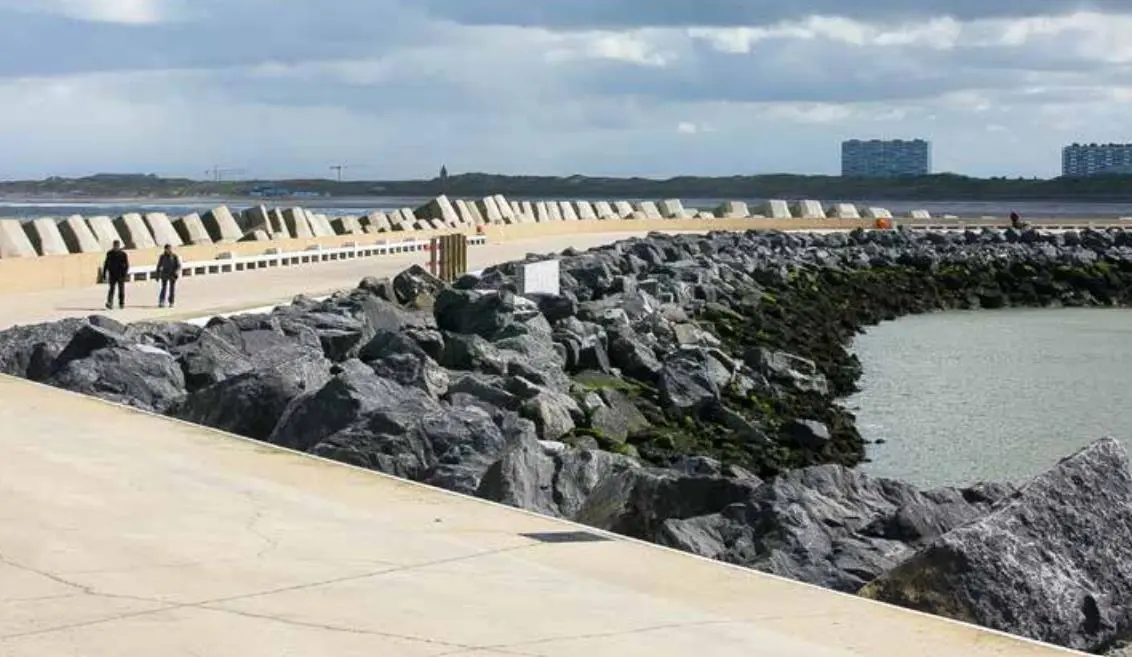
“The coast was also substantially modified in the mid-19th century when coastal protection and polders were built,” it says. “It is densely populated: around 32% of the Belgian population live in 10 coastal towns and cities. More than 50% of the coastal area is intensively used by maritime transport, commercial harbours and ports, marinas, tourism and recreation, and the low-lying polders further inland are mainly used for agricultural purposes.”
A third of the coast needed protecting, the report says, which has been done by building groynes, dykes, piers, sea walls, jetties and breakwaters.
In Ireland, the low-lying Maharees Peninsula has been identified as being at risk from ‘chronic coastal erosion’ with a sea level rise of one metre predicted by 2150, according to the Intergovernmental Panel on Climate Change.
Here a more natural, ongoing approach has been taken, such as planting sea buckthorn to stabilise shifting sand dunes and erecting fences along the front to try and mitigate sand blowing.
A third case study is the Venice Lagoon, a coastal body of water that the report says is threatened by sea level rises, erosion and silting.
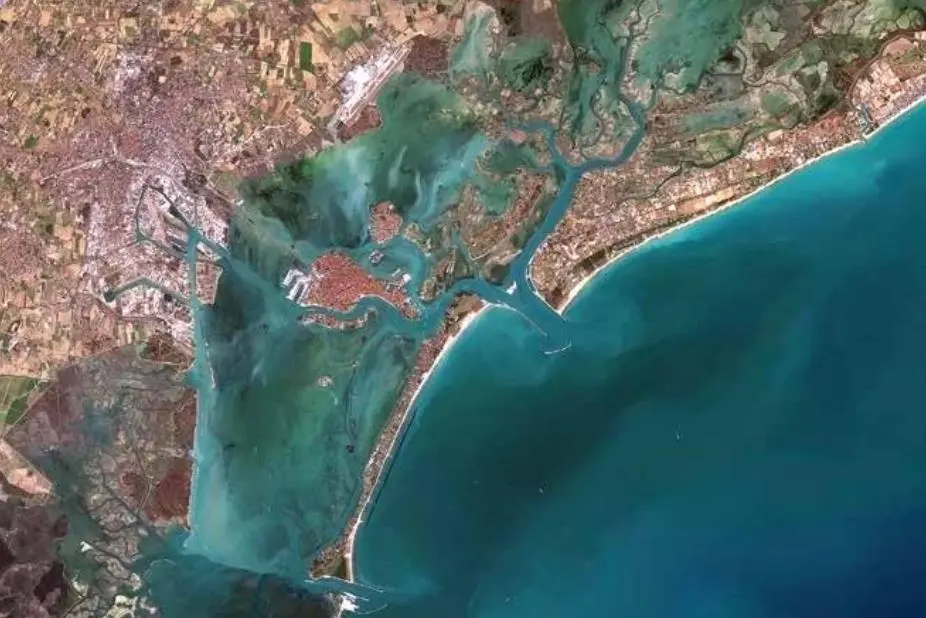
“A range of blue-green infrastructures including morphological restoration of channels and salt marshes and seagrass transplantation were employed,” the study says.
“Grey infrastructures in the form of mobile barriers and elevation of lower parts of the historical city were used to prevent high water events and restore the Lagoon’s morphology. A co-management approach supported by scientific knowledge was implemented to manage Lagoon fisheries, which improved governance and participation.”
The report gives a number of recommendations, none too specific, on developing better monitoring systems, communications between different stakeholders and better access to scientific advice.
Related Articles
 ELECTRICAL SYSTEMS
 ENVIRONMENT
 ENVIRONMENT