



Challenges of ports decarbonisation: An academic overview
Ports are struggling with a raft of rules that tell them to decarbonise, and researchers are burning their night candles working out how to reduce emissions for the vessels that use them and in the port activities themselves.
A piece of research by academics from the UK University of Birmingham has found that global ports with the largest absolute emission levels due to shipping were Singapore, Hong Kong, Tianjin (China) and Port Klang (Malaysia), and in fact the UK came out with relatively low emissions.
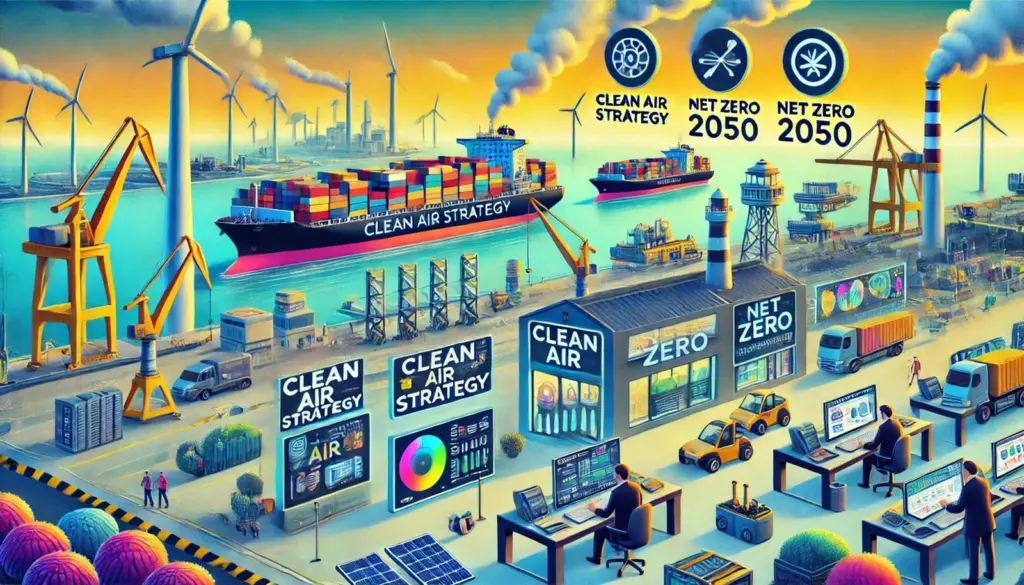
Yet there are policies in place now that are mandatory for British ports: the UK Maritime 2050 Plan; the Clean Air Strategy (CAS) published by DEFRA; and IMO policies aimed at maritime vessels and traffic.
The academics, James Niemann and Stuart Hillmansen, have put together a review of decarbonisation of specifically English ports, illustrating the main drivers and legislation within the UK and how the ports say they are dealing with it in their master plans.
They look at innovations, technology and operational changes being implemented, and how port operations are being electrified alongside the adoption of future fuels. Tidal and wave energy generation is also mentioned as potential opportunities to cut the carbon.
Progression is taking place, say the researchers, but the inherent nature of ports means that there are still many challenges.
Read the full report below. Niemann and Hillmansen’s bios are at the end of the report.
Related Articles
 ELECTRICAL SYSTEMS
 ENVIRONMENT
 ENVIRONMENT