





Deep water turbines – the next step
A report from the European Wind Energy Association (EWEA) has looked at the subject of deepwater offshore windfarms, taking wind energy far beyond what the term deepwater means with current projects.
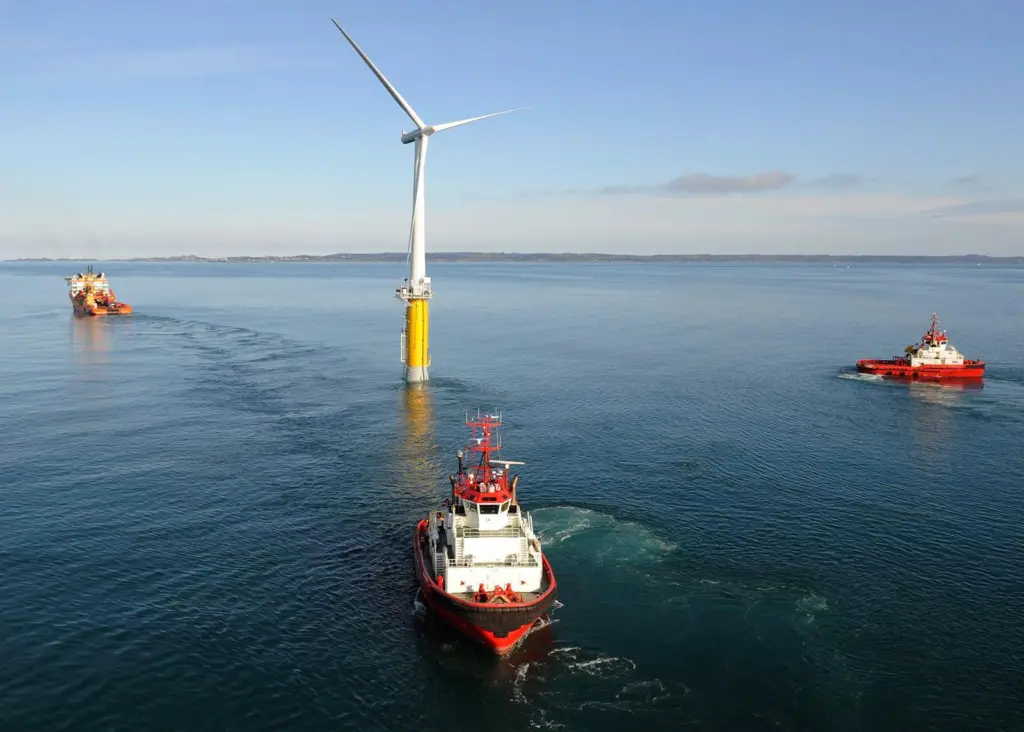
Speaking in 2012, Jose Manuel Barroso, President of the European Commission stated: “In terms of growth and job creation part of the answer is certainly through the blue economy. This sector is booming, and at times of crisis and pressure, this is rare good news”. The report’s thinking is based on the theme of supporting and developing this ‘blue economy’. With 70% of the Earth’s surface taken up by oceans rich in opportunities, the importance of tapping their resources is stressed.
Current windfarm substructures are economically limited to water depths of around 40m to 50m. In this context, the ‘deep offshore’ environment starts at depths greater than 50m. The report draws on the ‘Deep offshore and new foundations concepts’ Task Force, part of the EWEA Offshore Wind Industry Group, their analysis finding five headline points: Deep offshore designs are needed to unlock the potential for Atlantic, Mediterranean and deep North Sea waters; deep offshore designs constitute an export opportunity; deep water turbines could meet EU electricity consumption four times over; while deep offshore designs are competitive in terms of the levelised cost of energy technical, economic and political challenges need to be overcome and finally; the first deep offshore windfarms could be installed and grid connected by 2017.
UNLOCKING POTENTIAL
Of 1,662 turbines installed at the end of 2012 totalling 5GW of installed capacity at 55 windfarms in 10 European countries, all but two (grid connected) are built on fixed foundations. Regional split is 65% in the North Sea, 16% in the Baltic Sea and 19% in the Atlantic. There are however no offshore windfarms in the Mediterranean due to the water depth, current commercial substructures limited to around 40m to 50m depths.
The floating turbines are Statoil’s Hywind, the first large scale floating wind structure installed off the Norwegian coast in 2009, supporting a 2.3MW Siemens turbine, and WindFloat, developed by Principle Power and EDP and operational off the Portuguese coast since 2012 with a 2MW Vestas turbine. In addition to these, seven experimental floating substructures are in test phase, four in Europe, two in Japan and one in the US. Additionally there are three grid connected experimental floating substructures and 35 deepwater designs under development worldwide.
There are two drivers for going into deeper waters further offshore: satisfying national maritime spatial planning requirements and harnessing better energy resources further out to sea. An indication of the direction the industry is aiming for is that in 2012 the average water depth and distance offshore was 22m and 29km respectively but projects currently announced see depths increase to up to 215m and distances offshore increase to 200km. There is also the obvious requirement to accommodate increasingly higher capacity turbines.
EWEA paints a rosy picture of the market outlook forecasting 40GW capacity operational in European waters by 2020 against the backdrop of 5GW currently installed, 4.46GW under construction and 18GW consented at the end of 2102. The forecast for 2030 is 150GW, and by 2050, 460GW of installed capacity. These eye-wateringly high figures will however only be possible by exploiting the potential of the Mediterranean, Atlantic and deeper North Sea regions (off Norway).
INTRODUCING DEEPWATER DESIGNS
As with the current situation within the industry, development can only move forward with due regard to the various stages of R&D, testing and demonstration, R&D funding is considered important if deep offshore design production is to move to the commercialisation level.
Current deepwater foundations mostly involve three types, adapted from the offshore oil and gas industry: spar buoy, tension leg platform and semi-submersible; Europe, Japan and the US being the dominant regions of development.
Europe may well be able to boast more than 90% of the world’s installed offshore wind capacity but there is clearly a technology race with the United States and Japan, both keen to deploy deepwater technology in their own domestic markets. Within Europe there is a race between member states all looking to the advantage of being first movers and reaping the rewards of both domestic and export markets as the industry develops.
The document details various programmes and initiatives being pursued in the UK, France, Portugal, Spain, Norway, Germany, Sweden and the Netherlands. The list of activities advancing the cause of deepwater wind energy within Europe demonstrates the dynamism that currently exists with both money and suitable development sites being allocated as industry aims to scale up from single prototypes to demonstration and pre-series production. This first mover advantage for Europe will be crucial for all aspects of the supply chain and associated service providers, but only if momentum is maintained, particularly with clear political positive will in turn sending positive signals to developers and financiers.
The bigger prize of export opportunities is put into context when considering the immense offshore wind potential in the US. The document includes a table listing the offshore wind potential for areas up to 50NM offshore in the regions: New England, Mid-Atlantic, South Atlantic Bight, California, Pacific Northwest, Great Lakes, Gulf of Mexico and Hawaii. A staggering 4,150GW is quoted. It has to be remembered of course that there are no offshore windfarms in the US to date, but more than half this capacity is in waters deeper than 60m. Near-term development is seen as unlikely, meaning that current European deepwater turbine developments (already ahead of the US) could be ideally placed to capitalise on opportunities should the US potential become reality. As the report states however, significant efforts are also under way to research and develop deep offshore designs in the US.
The situation is Japan is less clear. With the world’s sixth largest Exclusive Economic Zone, Japan’s energy supply policy changed dramatically following the Fukushima nuclear accident. It is considered however that the country’s long-term energy and climate change strategies will be reassessed by the government now in power.
FACING THE CHALLENGES
As well as the usual technical and infrastructure challenges facing traditional technologies, additional challenges will be present with foundation design and communications and control systems of deepwater designs.
Experimental floating structures and complete prototypes will be needed to validate new numerical software tools to simulate the behaviour of floating concepts. The interaction between aerodynamic and structural behaviour of foundations and the turbine simultaneously (including moorings), is just one area to be explored. The likely timescales also indicate that large scale deployment of deepwater windfarms will feature turbines significantly larger than are currently seen. This will have implications for the optimisation of the turbine itself with the superstructure design. The number of variables with each potential project also perhaps indicates that there will be less of a ‘one size fits all’ solution, more individual design and detail solutions preferable. Controlling motions, specifically for the turbine itself (as opposed to the fixed turbine of shallower water projects) also lends itself to a horses for courses approach to the selection of specific designs to match specific environments and situations. Another issue will be the effect of the dynamic section of the cable as opposed to the more usual static cable situation, along with implications for inter-array cables in water depths greater than 100m.
Cost reductions and innovation are being pursued relentlessly throughout the industry, and the same requirement will undoubtedly apply for deepwater foundations considering that production and installation of substructures represents up to 20% of CAPEX.
NON-MARKET BARRIERS AND RECOMMENDATIONS
As mentioned, stability and clarity of the legislative framework are vital, the report stating that regulatory uncertainty is the main non-technological barrier threatening deep offshore wind deployment. Marine spatial planning along with accommodating conflicting uses of the oceans are other important areas, but an area seeing progress which in turn will send positive signals to industry. It is felt investors may be reluctant to embrace this move up from traditional fixed foundations and is identified as an area where risk perception has to be carefully managed and explained.
Recommendations are divided into three areas: political, economic and technical. As with traditional windfarm projects, a clear and stable legislative framework post 2020 based on a binding 2030 renewable energy target is fundamental for progress. A cohesive European industrial strategy is necessary along with simplified licensing and permitting procedures aimed at minimising lead time deployment. Strong collaborations between the different players (and sometimes competitors) should be encouraged through new project partnerships.
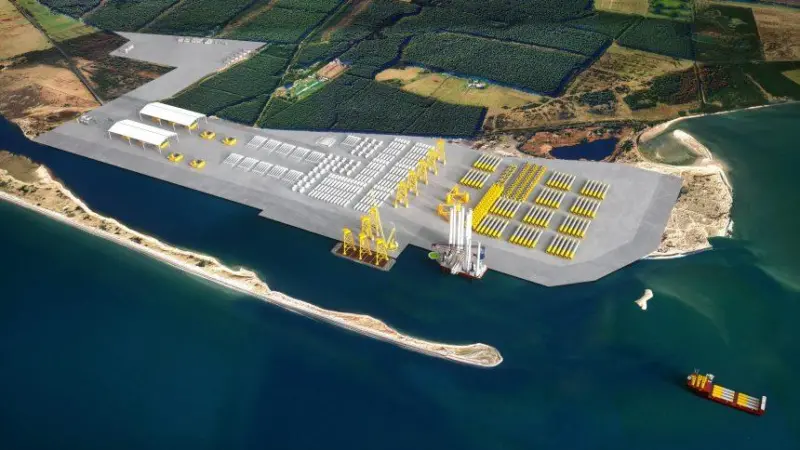
Economic recommendations suggest ports must provide enough space to accommodate installation vessels and component storage. Self-installing systems must be developed to minimise installation costs and the shortage of skilled professionals is an area that needs to be addressed.
Technically, modelling tools and numerical codes to simulate the whole structure’s behaviour should be developed. Optimisation between turbine design and size must be achieved. Research and development on control systems and mooring and anchoring systems are another area for attention. More test sites (small and large scale) should be developed to ensure the reliability and cost competitiveness of the deep offshore designs.
By Peter Barker
Related Articles
 MARINE CIVILS NEWS
 OTHER NEWS
 MARINE CONSTRUCTION